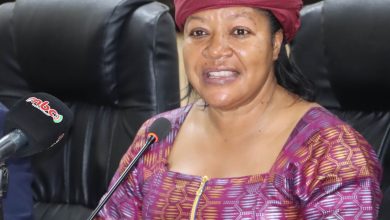
Minister of Gender, Children, Disability and Social Welfare, Mary Navicha made a Ministerial Statement in Parliament where she presented Community Development Month Initiative (CDM) which creates an opportunity for the citizens to actively do community service in their respective localities. After the presentation, legislator for Lilongwe Mapuyu South, Edward Chileka Banda, took time to respond to the initiative and pointed out that for better impact, there is need to review the Public Procurement Act which, through the years, has had more negative than positive impact on community’s ownership of development projects. Our reporter JACOB NANKHONYA caught up with EDWARD CHILEKA BANDA in this interview where he expounds on the matter. Excerpts:

What is your opinion towards Community Development Month (CMD)?
I believe that the CMD is a timely and important initiative because it seeks to revive the self-help spirit that Malawians once embraced. It comes at a time when communities have become increasingly dependent on government and other stakeholders instead of taking an active role in solving their own development challenges. I believe that it seeks to restore the culture where communities identify their own problems, contribute resources, and actively participate in implementing development projects.
In the House you hinted that review of the Public Procurement Act can improve the implementation of CMD, explain.
I believe the reforms unintentionally weakened the self-help spirit because they recognised only commercial contractors. As a result, even small community projects that were previously undertaken by local people are now awarded to private contractors. Before the transition to multiparty democracy, I saw communities rehabilitating roads, constructing school blocks, clinics, and other public infrastructures through initiatives such as Youth Week. Communities contributed bricks, sand, labour, and other resources, while government provided technical and financial support. There was a sense of ownership of projects by the communities. Later, the Public Procurement System started recognising commercial contractors who get engaged even on very small community projects thereby leading to a situation where the communities don’t feel involved anymore and gradually losing the sense of ownership of such projects.
You seem very passionate about the subject matter, why is that?
I am personally a product of the 1977 Youth Week project. The first school block in my village was built through that initiative, and without it I would not have had the opportunity to access education. That experience has shaped my appreciation for community-driven development. On the other hand, my Masters Degree Research paper was on ‘Cost-Efficiency in Malawi’s Public Procurement: Comparing Community and Commercial Contracting in School Construction Projects During the Covid-19 Era’. I wanted to understand whether involving communities directly in development projects could deliver better value for money. So, as you can see, I have every reason to be passionate with the subject matter.
What did your research reveal about community contracting?
My research showed that community contracting is far more cost-effective than commercial contracting. It encourages community participation, strengthens local ownership, and enables government to complete more projects with the same financial resources. Conversely, commercial contracting often leads to inflated project costs, corruption, delays, and poor community ownership. Contractors are mainly interested in making profits, and because they are usually not from the communities where projects are implemented, local people do not develop a sense of responsibility for maintaining those projects. While on the ground, there are things which we encountered such as; during the Covid-19 period, I observed that communities constructed two-classroom school blocks for between K10 million and K12 million. Similar projects undertaken by commercial contractors were costing between K30 million and K60 million, demonstrating the significant savings that community contracting can achieve. Clearly there is a huge saving derived from using community contracting.
What reforms do you recommend to improve community development?
I recommend reviewing the Public Procurement Act so that it formally recognises community contracting. Government should allow communities to manage suitable local development projects while providing funding, technical support, and oversight. This means that what the Minister presented is viable, with a few add-ons of course, but needs to be backed by the law.
In a nutshell, what are you saying?
I am strongly recommending that projects which communities are capable of implementing should fall under community contracting, while highly specialised or technically complex projects should be left to commercial contractors. If we revive community contracting, we can save public resources, strengthen community ownership, and restore the self-help spirit that once drove local development in Malawi. These are things that need to be in our minds if and when time comes for the review of the Public Procurement Act.